Written: July 26, 2026 · Updated: August 4, 2026
The world of sport is relentlessly driven by a pursuit of improvement. Athletes and coaches constantly seek new ways to enhance performance, pushing the boundaries of what’s possible. As we look ahead to 2026, one technology stands out as poised for significant impact: virtual reality (VR). This article explores how VR will reshape athlete training, skill development, and ultimately, competitive advantage.
The sports industry has embraced technological advancement at an unprecedented rate. From biometric sensors meticulously tracking movement to advanced analytics dissecting performance data, athletes are increasingly reliant on technology to gain every possible edge. While several tools contribute to this pursuit, virtual reality offers a unique and powerful platform: the ability to create fully immersive training environments.
Immersive Training Simulations: Replicating Reality
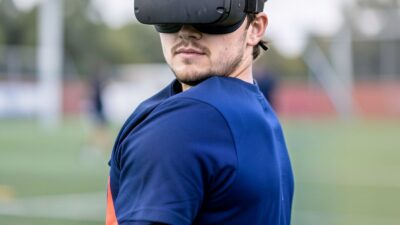
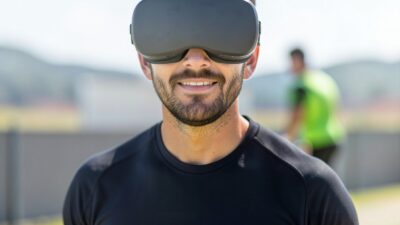
VR’s core strength – its capacity to generate highly realistic and interactive environments – has already proven valuable in sectors like education and healthcare. This translates directly into athlete training, offering simulations that replicate game scenarios with remarkable fidelity. Imagine a quarterback practicing reads against dynamically changing defensive formations without physical contact, or a gymnast perfecting routines without the risk of falls on solid ground. These simulations are not simply replications of physical conditions; they recreate pressure situations and unexpected events crucial for developing adaptability and decision-making skills.
Beyond Repetition: The Mental and Physical Advantages of VR Training
The benefits of incorporating VR extend far beyond simple skill repetition. Traditional training methods often rely on repetitive drills within static environments, which can be demotivating and potentially lead to performance plateaus. VR combats these issues with dynamic, engaging experiences that support motivation and accelerate learning. Athletes can review their performance in real-time within the simulation, receiving immediate feedback and identifying areas for targeted improvement. Crucially, VR significantly reduces the risk of injury by allowing athletes to safely practice high-impact movements without physical consequence.
Enhancing Mental Resilience with Virtual Reality Therapy (VRT)
The mental component of athletic performance is often an overlooked but crucial factor. Pressure, anxiety, and self-doubt can significantly undermine potential. Virtual reality therapy (VRT) provides a novel approach to addressing these psychological challenges. By exposing athletes to simulated stressful scenarios in a controlled environment, they can develop effective coping mechanisms and build critical mental resilience. For example, a swimmer struggling with pre-race jitters might repeatedly perform dives under virtual pressure, gradually desensitizing themselves to the anxiety and improving their consistency.
Current Adoption: A Landscape of Early Adopters and Emerging Challenges
The integration of VR into athlete training isn’t uniform across all sports or levels of competition. While professional teams and elite athletes are increasingly exploring its potential, broader adoption faces certain hurdles. The initial cost of equipment remains a barrier for many organizations, though prices are gradually falling with technological advancements. Another challenge lies in content creation – crafting truly effective simulations demands specialized expertise and resources. Additionally, addressing concerns about motion sickness among some users through improved headset technology is essential.
Personalized Training: Data-Driven Customization in VR Environments
The future of VR athlete training hinges on personalization driven by data analytics. We’re moving beyond simply replicating scenarios; future systems will track a range of metrics within simulations, including physiological responses like heart rate variability and eye tracking. This detailed feedback allows for training programs to be tailored precisely to individual needs. Imagine an AI system adjusting the difficulty level based on an athlete’s real-time stress levels or providing targeted visual cues to refine technique – that’s the power of personalized VR.
The synergy between Artificial Intelligence (AI) and VR holds immense potential. AI can analyze data collected from VR simulations, identifying subtle weaknesses and generating custom exercises for improvement. This creates a continuously adaptive learning environment designed to safely push athletes beyond their comfort zones.
Looking Ahead: Opportunities & Obstacles on the Horizon
Despite its meaningful capabilities, several key considerations remain before virtual reality becomes fully integrated into mainstream athlete training programs. The initial investment cost can still be prohibitive for some teams and individuals, although pricing is expected to decrease as technology matures and widespread adoption occurs. The creation of high-quality, realistic simulations also demands specialized expertise; addressing this requires investment in content development resources. Finally, ensuring VR training complements – rather than replaces – traditional methods is key to maximizing its impact.
The Evolution of Sports Technology
The integration of VR represents a significant step beyond earlier advancements like video analysis and performance tracking. While those tools remain valuable, VR offers an unparalleled level of immersion and interactivity that fundamentally changes how athletes learn and adapt. We’re seeing a shift from passive observation to active participation within simulated environments – allowing for faster skill acquisition and improved decision-making.
Addressing Potential Concerns & Ensuring Safety
The safe implementation of VR training is paramount. Considerations include minimizing the risk of motion sickness through optimized hardware and software, ensuring proper ergonomic setup to avoid physical strain, and developing protocols for gradual acclimatization to virtual environments. ethical considerations surrounding data privacy and potential psychological impact need careful attention.
The Role of Content Creators & Simulation Design
The quality of VR training simulations depends heavily on the expertise of content creators and simulation designers. These professionals must possess a deep understanding of athletic biomechanics, sport-specific techniques, and principles of learning to create truly effective experiences. Collaboration between coaches, athletes, and simulation specialists will be crucial for maximizing impact.
Beyond Physical Training: VR in Injury Rehabilitation & Skill Acquisition
VR’s utility extends beyond performance enhancement; it’s also proving invaluable in injury rehabilitation and skill acquisition for new athletes. Simulations can provide a safe and controlled environment for injured athletes to regain strength, coordination, and confidence. For novice athletes, VR offers a low-pressure opportunity to learn fundamental skills without the anxiety of performing in front of an audience.
The Path to Widespread Adoption: Accessibility & Affordability
Widespread adoption hinges on addressing accessibility and affordability concerns. As VR technology becomes more mainstream, hardware costs are expected to decrease significantly. efforts to develop lower-cost simulation platforms and open-source content will further democratize access to this powerful training tool.
The Competitive Landscape: Innovation & Partnerships in the VR Sports Ecosystem
The intersection of sports and virtual reality is attracting significant investment and support innovation. We’re seeing collaborations between hardware manufacturers, software developers, and sporting organizations – creating a dynamic ecosystem driving advancements in VR technology for athletes. Competition among these players will ultimately benefit athletes through improved products and services.
As we approach 2026, the ways athletes train and prepare for competition will continue to evolve dramatically. The incorporation of virtual reality isn’t just a fleeting trend; it’s an evolving paradigm that promises to elevate performance and redefine possibilities in sports. It’s about creating safer, more engaging, and ultimately, more effective training experiences.
Considering the significant advancements already made, what specific aspect of VR-integrated training do you believe will have the greatest impact on athlete development in the next few years?
Here’s where people get this wrong — assuming that virtual reality will replace traditional training methods entirely is a misconception. VR provides a powerful complement to existing training regimens, enhancing physical and mental development while reducing injury risks and offering immersive, realistic simulations. However, coaches must carefully integrate VR into training programs to ensure a balanced approach, using the technology’s strengths while maintaining the benefits of traditional methods.
A Practical Checklist for Embracing Virtual Reality in Athlete Training
- Evaluate current training methods: Understand the strengths and weaknesses of your existing regimen to determine where VR can provide additional value.
- Identify key areas for improvement: Prioritize skills or performance aspects that could benefit most from immersive, interactive simulations.
- Research available VR solutions: Explore the growing landscape of VR technology designed for athlete training and choose the most appropriate options for your needs.
- Collaborate with coaches and athletes: support open communication between coaches, athletes, and VR developers to ensure an effective integration into the training program.
- Monitor progress and adjust as needed: Track the impact of VR on performance and make adjustments to maintain a balanced approach, incorporating traditional methods when necessary.
By following this practical checklist, athletic organizations can begin implementing virtual reality into their training programs with confidence. Embracing VR will not only provide a competitive edge but also pave the way for new possibilities in sports performance and development.
The Future of Athlete Training: Empowering Progress
As we march towards 2026, the potential for virtual reality in athlete training is both exciting and vast. The technology has the power to revolutionize the way athletes prepare, pushing performance boundaries and reshaping competitive landscapes. Will your team embrace this opportunity?
Think about the possibilities for your own training or that of the teams you support. Imagine the athletes who could benefit from immersive, realistic simulations and mental resilience training. The future of athlete training is within reach — will you be a part of it?