Written: July 27, 2026 · Updated: August 4, 2026
Understanding the Rise of VR in Sports Training
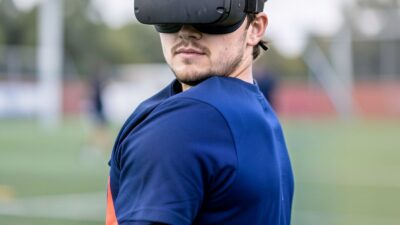
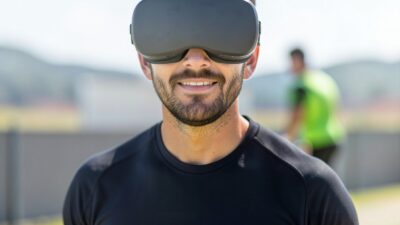
In the relentless pursuit of peak performance, elite athletes constantly seek innovative ways to sharpen their skills and gain a competitive advantage. The world of sports has always been one of incremental improvements, where fractions of a second or millimeters can separate victory from defeat. Increasingly, Virtual Reality (VR) is emerging not just as a futuristic novelty but as a powerful tool poised to reshape how elite athletes train and compete. The landscape of athletic preparation is undergoing a transformation, driven by the unique capabilities that VR offers – capabilities that go far beyond mere entertainment value.
Historically, training has relied heavily on physical drills, film study, and simulated game situations – all valuable methods but often limited by their ability to perfectly replicate real-world complexities. The challenges lie in controlling variables; a windy day can derail a golfer’s swing, a noisy crowd can distract a basketball player, and unpredictable terrain can impact a runner’s stride. VR overcomes these limitations by creating immersive digital environments that closely mirror the demands of competition with unparalleled precision. This isn’t simply about “playing” a game in VR; it’s about strategically engineering training scenarios to maximize skill development and mental resilience.
Simulating Realities: Replicating Conditions in Virtual Space
The core strength of VR training lies in its capacity to simulate a wide range of scenarios athletes may encounter during actual competitions. Consider a downhill skier facing unpredictable weather conditions – blinding snow, icy patches, shifting wind – or a basketball player navigating a packed arena filled with roaring fans and distracting noises. These environments are fraught with variables that can significantly impact performance. With VR, coaches can precisely control and replicate such conditions, allowing athletes to develop strategies and build resilience in a safe and controlled setting.
This extends beyond simply recreating visual elements. VR allows for the simulation of subtle environmental factors often overlooked in traditional training. For example, a cyclist could train on a virtual course with varying wind resistance profiles, or a tennis player could experience simulated crowd noise at different decibel levels to acclimate themselves to pressure situations. The ability to manipulate these variables provides athletes with an unprecedented level of control over their preparation. the VR environment can be adjusted in real-time based on the athlete’s performance, creating dynamically challenging training sessions that constantly push them to improve.
Velocity-Based Training (VBT) Enhanced by VR Data Collection
Beyond simple scenario replication, VR offers unique opportunities for data collection and analysis through its integration with velocity-based training (VBT). VBT is a powerful method used to monitor performance and fatigue levels – it focuses on the speed at which an athlete performs an exercise or movement. Traditionally, this requires specialized equipment and careful measurement. With VR, however, every movement within the virtual environment – speed, acceleration, reaction time, angles of joint movement – can be tracked with incredible granularity.
This data drives highly personalized coaching strategies and ensures training remains targeted and effective. For instance, a baseball pitcher’s arm speed and release point could be analyzed in a virtual pitching mound scenario, allowing for immediate feedback and adjustments to technique. Similarly, a volleyball player’s jump height and approach angle can be meticulously tracked and adjusted through repeated practice within a virtual court environment. The real-time nature of this data also allows coaches to monitor fatigue levels during training sessions, preventing overtraining and minimizing the risk of injury. The integration with biometric sensors – heart rate monitors, muscle oxygenation sensors – further enriches the data collected, providing a holistic picture of an athlete’s physiological state.
Mental Fortitude: VR as a Psychological Training Tool
The mental aspect of sport is paramount, especially at the elite level. Pressure, anxiety, and self-doubt can be just as detrimental as physical limitations. VR provides an invaluable platform for psychological conditioning, going beyond the typical visualization techniques employed by athletes. Athletes can use it to practice executing skills under simulated pressure – imagine a golfer facing a virtual gallery of chanting fans on the 18th hole or a swimmer preparing for a race while virtually experiencing the roar of the crowd.
This “virtual exposure therapy” helps desensitize athletes to stress and anxiety, allowing them to maintain focus and composure in high-stakes situations. VR allows coaches to create distractions within the virtual environment – sudden noises, unexpected movements – forcing athletes to hone their concentration skills. Repeating successful actions in a virtual environment builds confidence and reinforces positive mental patterns – essentially, creating muscle memory for mental resilience. This is particularly valuable for sports where split-second decisions under immense pressure are critical, such as racing or competitive gymnastics.
Injury Prevention through Safe Repetition: Mastering High-Risk Movements
Certain sports involve maneuvers that carry inherent risk of injury. A gymnast attempting a complex routine on the uneven bars, a snowboarder tackling a steep and icy slope, or a free skier performing aerial tricks – these situations demand precision and flawless execution. VR allows athletes to practice these high-risk techniques repeatedly in a safe digital space, perfecting their form and building muscle memory without the fear of physical harm. This is not simply about avoiding physical contact; it’s about allowing athletes to make mistakes and learn from them in an environment where consequences are minimal.
This repeated practice support greater confidence and control, ultimately reducing the likelihood of on-field injuries when the techniques are performed in a real-world setting. It allows for experimentation – trying different approaches and adjusting form without risk. VR can be used to simulate specific injury scenarios, allowing athletes to learn how to react appropriately and prevent further harm. Imagine a soccer player practicing how to safely land after an awkward collision or a basketball player learning the proper technique to avoid ankle sprains.
Beyond Recreation: Customization and Scalability for Every Athlete
The beauty of VR training isn’t limited to replicating existing conditions; it allows for complete customization. Coaches can tailor virtual environments to address specific weaknesses – for example, creating a virtual field with unusually angled slopes to improve a golfer’s ability to adjust their swing. They can also create unique challenges that push athletes beyond their comfort zones and support adaptability.
VR is becoming increasingly scalable, allowing individual athletes, small teams, and even entire national programs to benefit from this technology. The cost of entry is decreasing as VR hardware becomes more affordable and accessible. Cloud-based VR training platforms are further reducing the complexity of implementation, making it easier for organizations of all sizes to adopt this technology. This democratization of VR training has the potential to level the playing field, providing athletes around the world with access to cutting-edge preparation tools.
The Future Landscape of Sports: What’s Next for VR Training?
The current application of VR in sports is just the tip of the iceberg. As the technology continues to evolve – with improved resolution and realism making virtual environments increasingly indistinguishable from reality, haptic feedback providing a sense of touch, and advanced motion tracking capturing even subtle nuances of movement – its potential will only continue to grow. We’re likely to see:
- AI-Powered Coaching: Integration of artificial intelligence to provide real-time personalized feedback during VR training sessions, adapting the difficulty level based on individual performance.
- Multiplayer Virtual Environments: Athletes collaborating and competing with each other in shared virtual spaces, simulating team dynamics and support camaraderie.
- Augmented Reality (AR) Integration: Combining VR’s immersive qualities with AR’s ability to overlay digital information onto the real world, creating hybrid training experiences.
- Personalized Biometric Feedback: VR systems integrating more advanced biometric data – sweat analysis, muscle fatigue metrics – providing even deeper insights into an athlete’s physiological state.
The convergence of VR, AI, and biomechanics is poised to revolutionize athletic preparation, open up new levels of performance and innovation in the world of sports.
What specific challenges do you foresee preventing widespread adoption of VR training within smaller or less resourced sporting organizations?