Written: August 4, 2026
The initial setup cost for VR equipment can be substantial, making it a significant investment for teams, especially at the grassroots level. Additionally, maintaining cutting-edge technology requires ongoing resources to ensure its effectiveness and accessibility.
Learning Curve and Adoption
Implementing VR in sports training introduces a learning curve that requires time, patience, and resources for both athletes and coaches. While the technology promises to revolutionize performance, widespread adoption may take time as teams navigate the intricacies of virtual training.
Practical Checklist: Steps Towards Embracing Virtual Reality in Sports Training 1. Assess Needs: Identify specific areas where VR could provide significant benefits to your team or individual athletes, whether it’s enhancing physical conditioning, improving mental fortitude, or streamlining scouting processes. 2. Budget Allocation: Determine the financial investment required for implementing a VR training program, and allocate funds accordingly. 3. Partner with Experts: Collaborate with technology providers who specialize in VR solutions tailored to sports training to ensure optimal results. 4. Training Programs: Develop structured training programs that gradually introduce athletes to the VR environment, allowing them to acclimate and maximize the benefits of virtual training. 5. Monitor Progress: Continuously evaluate the impact of VR on performance, adjusting strategies as necessary to ensure continued improvement. Closing Thoughts: Embracing a Brighter Future The integration of virtual reality into sports training opens up a world of possibilities for athletes and teams alike. By harnessing this technology’s potential, we can elevate performance, nurture mental resilience, and revolutionize the way we approach sports – all while pushing the boundaries of what’s possible in the realm of athletic achievement. As we stand on the brink of a new era in sports training, it’s worth considering: How might your team or organization capitalize on this exciting opportunity? And more importantly, what steps will you take to ensure that virtual reality becomes an integral part of your sports development strategy moving forward?The Dawn of Immersive Sports Training: How Virtual Reality is Changing the Game
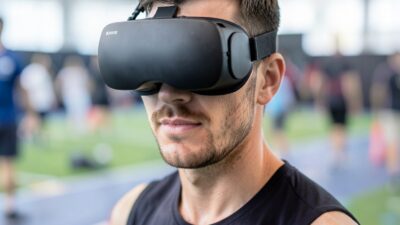
For years, success in sports has been a relentless pursuit of physical excellence, strategic mastery, and countless hours on the practice field. But what if those training sessions could be dramatically enhanced with technology that transports athletes to virtually any environment imaginable? Virtual reality (VR) is no longer a futuristic fantasy; it’s rapidly emerging as a meaningful tool reshaping athlete development and pushing the boundaries of performance.
Replicating Reality: Creating Immersive Training Environments
The most compelling advantage of VR in sports lies in its ability to generate strikingly realistic environments. Imagine a golfer honing their swing under the intense heat of an arid desert course, or a basketball player relentlessly practicing free throws amidst the deafening roar of a packed arena – all from the comfort and safety of a state-of-the-art training facility. This capability allows athletes to accurately replicate diverse weather conditions (simulated rain, wind, or snow), playing surfaces (varying grass lengths, different court textures, or even artificial turf), and simulate audience pressure without the logistical hurdles and potential risks associated with outdoor scenarios. Teams can now readily recreate specific game situations that are difficult or costly to arrange in person.
Personalized Training: Data-Driven Insights for Peak Performance
Beyond simply recreating environments, VR open up unprecedented opportunities for personalized training regimens. Sophisticated software embedded within these virtual experiences meticulously analyzes athlete performance during each session. This generates real-time feedback on technique, reaction time, and decision-making – a far more granular assessment than traditional methods allow. This isn’t just a post-practice report; it’s an interactive element within the experience itself, allowing athletes to adjust their actions dynamically and improve their skills instantaneously. Coaches can use this rich stream of data to precisely identify areas for improvement and tailor training plans with unprecedented accuracy, focusing resources where they are needed most.
Sharpening the Mental Edge: Psychological Preparation in a Virtual World
The mental fortitude of an athlete is as crucial as physical conditioning. VR excels at simulating high-pressure situations important for peak performance. Athletes can participate in virtual competitions against representations of their best performances, or even confront recreations of past defeats – providing a safe and controlled environment to dissect mistakes and support growth. This immersion builds resilience, strengthens focus under intense pressure, and cultivates the psychological toughness essential for sustained success. The ability to repeatedly “reset” crucial moments provides a unique opportunity for learning and refinement.
Expanding Reach: Scouting, Remote Collaboration & Cost Efficiency
The benefits of VR extend far beyond individual athlete development. Teams are now employing virtual scouting techniques—coaches can remotely analyze opponent gameplay strategies without incurring travel expenses or dealing with logistical complications. Distributed team practices become significantly more feasible, increasing accessibility and collaboration across wider networks. This technological shift also leads to substantial cost savings through reduced travel demands for both athletes and essential support staff.
Leveling the Playing Field: Accessibility & Opportunity in Sports
Historically, access to high-quality athletic training has been restricted by geographic location and financial means. VR technology holds significant potential to democratize this accessibility – providing aspiring athletes with elite coaching and facilities regardless of their background or geographical constraints. Communities often underserved by traditional sports programs can now offer their athletes immersive training experiences previously unattainable, support greater participation and creating a more equitable playing field.
Addressing the Challenges: Ensuring Accuracy and Overcoming Limitations
While the potential benefits are undeniably exciting, VR training isn’t without its limitations. The accuracy of simulations requires ongoing refinement to realistically capture real-world physics and nuanced interactions; current systems sometimes struggle with details like ball spin or subtle ground variations. The initial investment in high-end VR equipment and specialized software remains a substantial barrier for some organizations and individuals. concerns exist regarding potential motion sickness or discomfort experienced by some users during extended VR sessions – developers are actively working to mitigate these effects through improved hardware and software design.
Integration & the Future: A Hybrid Approach to Athletic Training
The most likely trajectory of sports training isn’t a wholesale replacement of traditional methods with VR, but rather a strategic integration—a carefully considered hybrid approach. Coaches will use VR as a complementary tool, augmenting existing regimens to maximize effectiveness and minimize any potential drawbacks. We can anticipate continued advancements in haptic feedback technology – enhancing the sense of touch within virtual environments – and the emergence of specialized VR platforms meticulously designed for the unique demands of different sports, from precision baseball simulations to dynamic soccer drills.
The Potential Impact: A True Paradigm Shift?
The integration of virtual reality training is poised to fundamentally alter how athletes develop. It’s changing both the methods used in practice and the ways performance is analyzed. While these technology offers a wealth of benefits, it requires careful consideration of its limitations to ensure maximum effectiveness and prioritize athlete well-being. As VR technology continues to evolve at an astonishing pace, its influence on sports will inevitably intensify.
As we look forward to this evolving landscape of athletic training, are you curious about how your favorite sport might adapt and benefit from this powerful technology?
The Tradeoffs: Balancing Innovation with Real-world Challenges While the potential benefits of virtual reality (VR) in sports training are undeniable, it’s essential to acknowledge the challenges that come with its adoption.Investment and Infrastructure
The initial setup cost for VR equipment can be substantial, making it a significant investment for teams, especially at the grassroots level. Additionally, maintaining cutting-edge technology requires ongoing resources to ensure its effectiveness and accessibility.
Learning Curve and Adoption
Implementing VR in sports training introduces a learning curve that requires time, patience, and resources for both athletes and coaches. While the technology promises to revolutionize performance, widespread adoption may take time as teams navigate the intricacies of virtual training.
Practical Checklist: Steps Towards Embracing Virtual Reality in Sports Training 1. Assess Needs: Identify specific areas where VR could provide significant benefits to your team or individual athletes, whether it’s enhancing physical conditioning, improving mental fortitude, or streamlining scouting processes. 2. Budget Allocation: Determine the financial investment required for implementing a VR training program, and allocate funds accordingly. 3. Partner with Experts: Collaborate with technology providers who specialize in VR solutions tailored to sports training to ensure optimal results. 4. Training Programs: Develop structured training programs that gradually introduce athletes to the VR environment, allowing them to acclimate and maximize the benefits of virtual training. 5. Monitor Progress: Continuously evaluate the impact of VR on performance, adjusting strategies as necessary to ensure continued improvement. Closing Thoughts: Embracing a Brighter Future The integration of virtual reality into sports training opens up a world of possibilities for athletes and teams alike. By harnessing this technology’s potential, we can elevate performance, nurture mental resilience, and revolutionize the way we approach sports – all while pushing the boundaries of what’s possible in the realm of athletic achievement. As we stand on the brink of a new era in sports training, it’s worth considering: How might your team or organization capitalize on this exciting opportunity? And more importantly, what steps will you take to ensure that virtual reality becomes an integral part of your sports development strategy moving forward?