Written: July 8, 2026 · Updated: August 7, 2026
Virtual Reality: A Game Changer in Sports Training
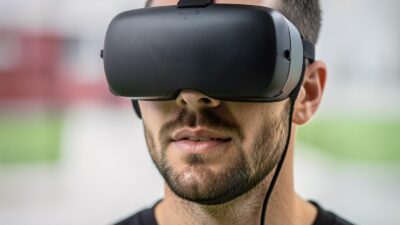
The convergence of technology and athletics has always spurred innovation – from specialized equipment to data-driven analysis. Now, a new frontier is emerging: virtual reality (VR). Once relegated to gaming and entertainment, VR is increasingly recognized as a powerful tool for enhancing athlete performance across diverse sports disciplines. But how does this immersive experience translate into tangible improvements in skill, reaction time, and overall athletic prowess?
The Rapid Rise of Virtual Reality in Athletics
The adoption of VR within the sports world has been surprisingly rapid. From professional football teams creating simulated game scenarios to individual basketball players honing their free-throw accuracy, VR offers a uniquely controlled environment for skill development. Unlike traditional training methods relying on physical drills or video analysis, VR allows athletes to repeatedly practice high-pressure situations without the physical risk or resource constraints often associated with real-world simulations. This capability extends beyond simple repetition; trainers can modify variables—opponent behavior, weather conditions, field layout—to create hyper-specific training experiences catered to individual athlete needs.
Addressing Initial Concerns: Virtual Reality Adaptation & Discomfort
A significant hurdle in the initial adoption of VR has been the potential for “virtual reality sickness,” characterized by nausea, dizziness, and disorientation. While this remains a valid concern, particularly with earlier headset models, technological advancements are continually minimizing its impact through improved headset design, faster refresh rates, and more sophisticated tracking systems. athletes’ brains demonstrate an impressive ability to adapt over time, reducing discomfort with repeated exposure. This acclimatization process is now being incorporated into training protocols, gradually introducing athletes to the VR environment.
Enhancing Performance: Reaction Time & Spatial Awareness
The advantages of VR training extend beyond simply replicating existing drills. Perhaps most significantly, VR excels at improving reaction times and spatial awareness – both critical components in athletic performance. Simulated environments can expose athletes to rapidly changing stimuli that would be difficult or dangerous to recreate in a physical setting. Imagine a goalkeeper practicing deflections from unpredictable angles, a race car driver experiencing varying track conditions without the risk of an accident, or a baseball batter reacting to increasingly complex pitch sequences. These controlled, intensified scenarios push athletes beyond their comfort zones and accelerate skill development.
Beyond Athletics: VR’s Broader Applications
The potential of VR isn’t confined to traditional sports. Its applications extend far wider. Architectural design firms are using it for immersive walkthroughs of structures before construction even begins, allowing stakeholders to experience a space in a tangible way. Similarly, urban planners use VR to visualize proposed developments and assess their impact on communities. This widespread applicability demonstrates the versatile nature of the technology and underscores its potential across diverse fields – from healthcare training to engineering design.
The Impact of High-End Headsets: Apple Vision Pro & Future Innovations
The recent emergence of headsets like Apple’s Vision Pro has injected renewed excitement into the VR landscape. While initially positioned as a mixed-reality device, blending augmented and virtual elements, its processing power and display resolution represent significant advancements that could dramatically impact sports training. Higher fidelity visuals, more precise tracking, lower latency, and improved hand-tracking capabilities will all contribute to a more realistic and immersive experience, further expanding VR’s utility in athlete development. However, accessibility and cost remain key factors influencing widespread adoption.
Creating Personalized Training Regimens with Data-Driven Insights
The true power of VR lies not just in replicating existing training methods but in creating highly personalized programs. Data collected during virtual simulations – reaction times, movement patterns, decision-making processes – can be analyzed to identify strengths and weaknesses. This information allows trainers to tailor workouts specifically to the athlete’s needs, maximizing their potential for improvement. Imagine a VR system that automatically adjusts difficulty levels based on real-time performance or provides individualized feedback during simulated game play, leading to more efficient training.
Addressing Remaining Challenges: Cost, Content & Integration
Despite its immense promise, VR training isn’t without challenges. The initial investment in hardware and software can be substantial, posing a barrier for smaller organizations and individual athletes. creating realistic and engaging virtual environments requires specialized skills and resources. Perhaps the biggest hurdle remains smooth data integration – connecting VR performance metrics with existing athlete tracking systems (like GPS wearables or biomechanical sensors) to provide a holistic view of an athlete’s capabilities and areas needing improvement. Developing content that is both engaging and effective also demands skilled developers and sports scientists.
A Collaborative Future: Combining Traditional Training & Immersive Experiences
The future of sports training will likely involve a synergistic relationship between traditional methods and immersive VR experiences. As technology continues to mature, we can expect more sophisticated simulations, personalized training programs, and increasingly affordable hardware. The key lies in collaboration – bringing together sports scientists, trainers, developers, and athletes to open up the full potential of this meaningful tool and ensure its responsible implementation.
Embracing Innovation: Reshaping Athlete Development
Virtual reality has transitioned from a futuristic concept to a tangible training aid with the power to redefine athletic performance. While challenges remain, the ongoing advancements in hardware, software, and content creation promise a future where athletes can consistently push their boundaries in safe, controlled, and highly personalized virtual environments. From enhancing reaction time to improving spatial awareness, VR is poised to become an indispensable tool in the athlete’s arsenal.
From its initial introduction as a novelty to its current role as a performance enhancer, the journey of VR in sports has been remarkable. As you consider the possibilities for optimizing your own training or coaching methods, what specific aspect of VR’s application excites you most?
Here’s where people often get it wrong: While VR offers undeniable benefits for sports training, its true meaningful power lies in its capacity to revolutionize various industries beyond athletics. In this rapidly evolving landscape, the key is not only embracing the technology but also understanding its limitations and potential applications. To help you navigate this exciting frontier, we’ve compiled a practical checklist for evaluating VR’s applicability in your field:
Practical Checklist for Incorporating Virtual Reality
- Identify Key Needs: What are the specific training or simulation requirements in your field? Is there a need for repetitive, controlled scenarios that traditional methods struggle to deliver?
- Assess Resources: Do you have access to the necessary hardware and software to implement VR effectively? Consider factors such as budget, technical expertise, and available infrastructure.
- Evaluate User Experience: How will VR impact users in terms of comfort, immersion, and overall effectiveness? Address potential concerns related to discomfort and adaptation early in the implementation process.
- Plan for Iteration: As technology evolves, so too will the capabilities and limitations of VR. Be prepared to adapt your approach as new hardware and software become available.
As we continue to explore this burgeoning frontier, it’s important to remember that the true value of virtual reality lies not only in its ability to simulate real-world scenarios but also in its potential to create entirely new ones. With a thoughtful and strategic approach, VR has the power to reshape the way we learn, train, and innovate across industries.
Call to Action: Are there areas in your field that could be enhanced through the implementation of virtual reality? Share your insights below, and let’s look deeper into this meaningful technology together.